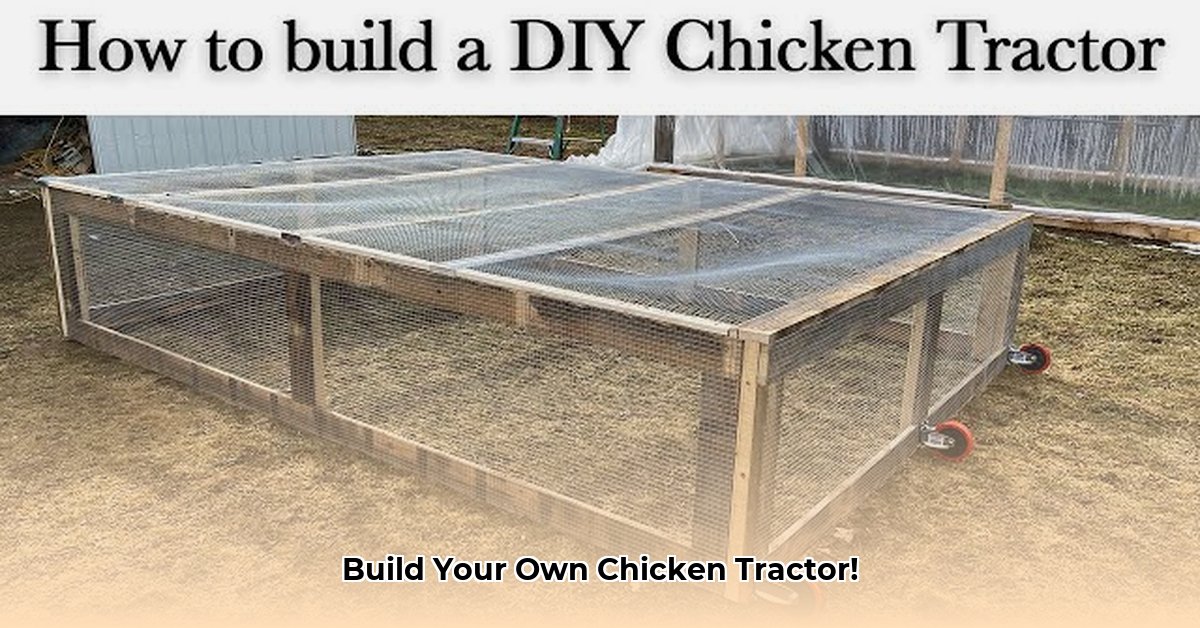
Joel Salatin Chicken Tractor: Two Designs Compared
Dreaming of fresh eggs and pasture-raised chicken? A Joel Salatin-style chicken tractor is your ticket to farm-fresh goodness! These mobile coops allow your hens to graze freely, enriching your soil while providing you with delicious eggs. But with various designs, choosing the right one can be tricky. This guide compares two popular sizes: a 7ft x 7ft and a 12ft x 12ft model, helping you select the best fit for your needs and lifestyle. For even more design ideas, check out these PVC chicken tractor plans.
Why choose a chicken tractor? Aren't traditional coops easier? While simpler to build, traditional coops confine birds, limiting their natural foraging behaviors and potentially leading to soil depletion. Chicken tractors, on the other hand, promote healthier birds and soil. This is what Joel Salatin, the renowned polyface farm visionary, champions.
Design Showdown: 7ft x 7ft vs. 12ft x 12ft
Both sizes adhere to Salatin's principles: easy construction, mobility, and efficient pasture use. However, notable differences impact bird capacity, construction effort, and space requirements.
| Feature | 7ft x 7ft Tractor | 12ft x 12ft Tractor |
|---|---|---|
| Chicken Capacity | ~25 hens (2 sq ft/hen) | ~72-96 hens (1.5-2 sq ft/hen) |
| Best Suited For | Small flocks, backyard setups, limited space | Larger flocks, small-scale farms, ample space |
| Mobility | Easily moved manually | May require assistance or specialized equipment |
| Construction | Faster build, fewer materials | More time-intensive, greater material needs |
| Initial Cost | Lower | Higher |
| Waste Management | Simpler | More complex; composting is often recommended |
Building Your Joel Salatin Chicken Tractor: A Step-by-Step Guide
Before you begin, gather these materials. Adjust quantities based on your chosen size. Remember to check local building codes for material specifications and safety regulations.
Materials List (Both Sizes):
- Pressure-treated lumber or durable cedar (resistant to rot and decay)
- Strong wire mesh (hardware cloth) with small openings to prevent escapes but sufficient ventilation.
- Sturdy hinges for the door – heavy-duty hinges are recommended.
- Heavy-duty wheels or runners (consider the combined weight of the coop and chickens)
- Enough screws for secure assembly – use weather-resistant screws.
- Optional: Plywood for the floor (significantly improves longevity and hygiene)
Construction Steps:
Frame Assembly: Construct a sturdy rectangular frame using your chosen lumber. Ensure squareness for stability. Pre-cut lumber can simplify this process.
Wire Mesh Enclosure: Attach the wire mesh securely to the frame. Staples or wire ties can be easier than screws. Consider double-layering the mesh for enhanced predator protection. Ensure adequate ventilation.
Door Construction: Cut and attach a sturdy door with strong hinges for easy access. Reinforce the hinges for increased durability.
Wheel/Runner Installation: Attach the wheels or runners to the frame’s base. Securely fasten them to support the structure and its inhabitants.
Optional Plywood Floor: If using, securely attach a plywood floor within the frame for added protection and longevity.
Repeat these steps for both the 7ft x 7ft and 12ft x 12ft designs, adjusting dimensions accordingly.
Pasture Management: The Art of Rotational Grazing
The beauty of a chicken tractor is its mobility. Regular relocation prevents overgrazing and improves soil health. Moving your coop daily or every other day, depending on flock size and pasture conditions, is recommended. This mimics nature, continuously providing fresh forage for your chickens. Proper manure management is also key – think of it as natural fertilizer!
Predator Control and Biosecurity: Protecting Your Flock
Protecting your chickens is paramount. Use strong wire mesh, consider burying the bottom edges to deter digging predators, and supplement with additional predator netting if necessary. A livestock guardian animal (like a llama or a well-trained dog) can further enhance security. Regular cleaning is essential for disease prevention. A clean coop means healthy chickens!
Choosing the Right Design: The Perfect Fit for Your Needs
The ideal chicken tractor size depends on your situation. A 7ft x 7ft tractor suits small flocks and limited space. A 12ft x 12ft model is better for larger operations or those with ample land. Consider your available land, your time commitment for building and moving the coop, your processing capabilities, and local regulations.
Key Takeaways: Building Your Small-Scale Chicken Tractor
- Building a Joel Salatin-style chicken tractor provides a cost-effective and scalable solution for raising pastured poultry, promoting healthier birds and soil.
- The 7ft x 7ft and 12ft x 12ft designs cater to different flock sizes and space limitations. Careful planning is crucial for choosing the right size.
- While straightforward, construction demands attention to detail to ensure stability and security. Prioritize safety throughout the process.
- Successful operation hinges on diligent pasture management and robust predator control strategies.
This guide provides a solid foundation for building your own chicken tractor. Remember to adapt these plans to your specific needs and consult local resources and building codes for compliance. Happy building!